The decarbonisation of metal extractive processes is imperative towards achieving economic, social and environmental sustainability of pyrometallurgical operations. Conventional pyrometallurgical processes are characterised by intense energy consumption, carbon emissions and substantial generation of by-products such as slag. HAlMan, abbreviation for Hydrogen and Aluminothermic Reduction Process for Manganese, is a potential game-changer for the extractive metallurgical industry. It is essentially a zero-waste process for manganese alloys production utilising hydrogen gas and aluminium metal as carbon-free reductants, while recycling manganese slag for secondary applications. This technology was demonstrated at pilot-scale by the Pyrometallurgy Division of Mintek, South Africa. The second campaign marked a historic moment at Mintek when the operations team first brought aboard women as front line operators, involved from furnace relining to charge feeding, and all the way to “standing in the line of fire” while tapping the furnace.
What was the goal of the campaigns?
The goal of HAlMan campaigns was to demonstrate the aluminothermic reduction smelting of hydrogen pre-reduced manganese ores and high-carbon ferromanganese (HCFeMn) slag. Campaign 2 smelting was on Nchwaning and United Manganese of Kalahari (UMK) ores which were pre-reduced in a vertical retort furnace. The campaign aimed to highlight the process’s significant potential to reduce carbon dioxide (CO2) emissions in Mn alloy production (Mn metal, green FeMn, and Mn-Al alloys) and the production of calcium-aluminate slag as a valuable by-product.
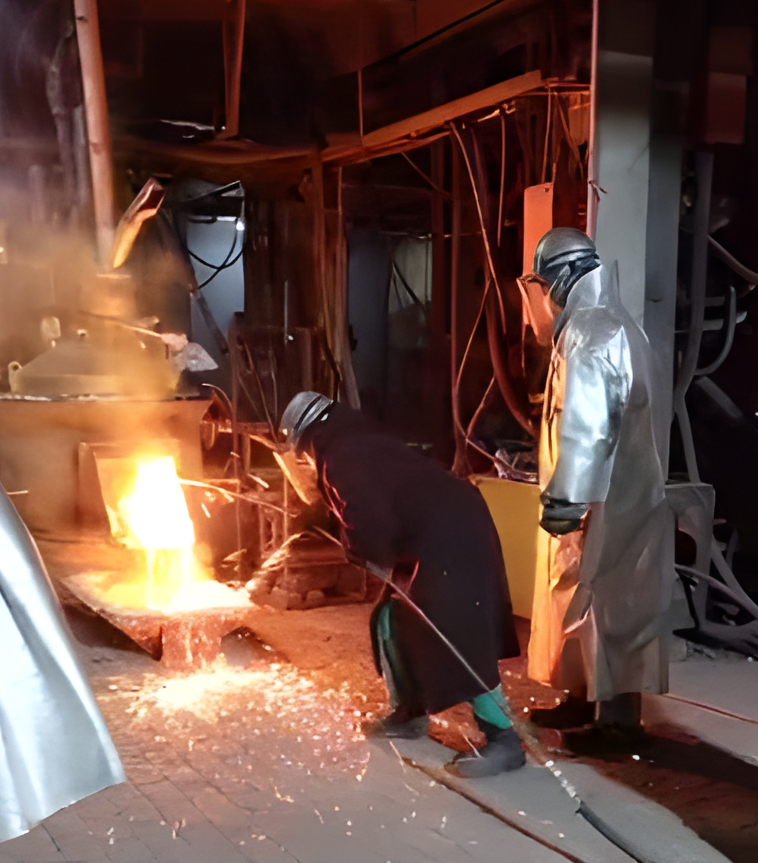
Female operator tapping the 200 kW furnace at Mintek, South Africa
What was done?
The HAlMan smelting Campaign 2 was run from 18 to 22 June 2025 using a 200 kW DC arc furnace with a one-meter shell and a single central electrode, to process more than 3,000 kg of hydrogen pre-reduced ore. The feed mix contained ore, aluminium reductant and lime as flux.
Molten discharge tapped and flowing into a ladle, and Sample of metal produced during campaign
What were the results of the campaign?
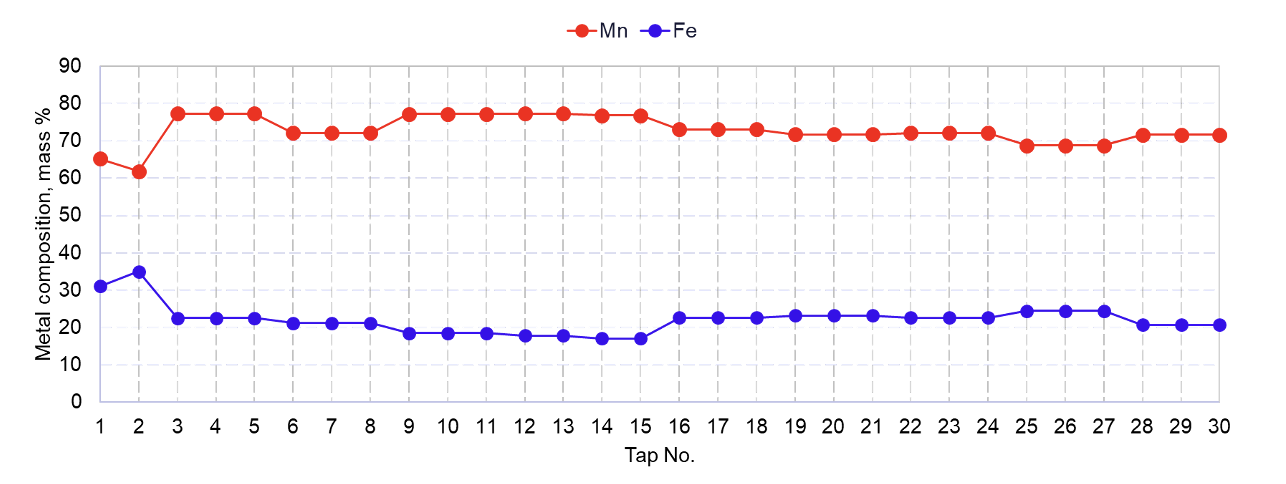
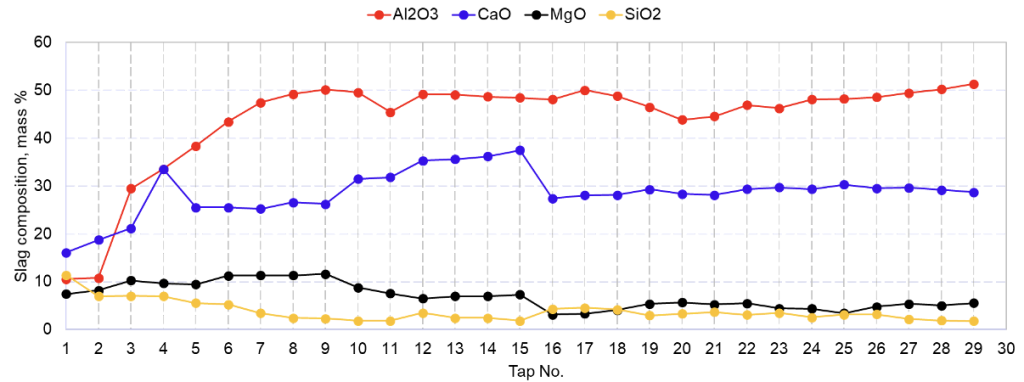
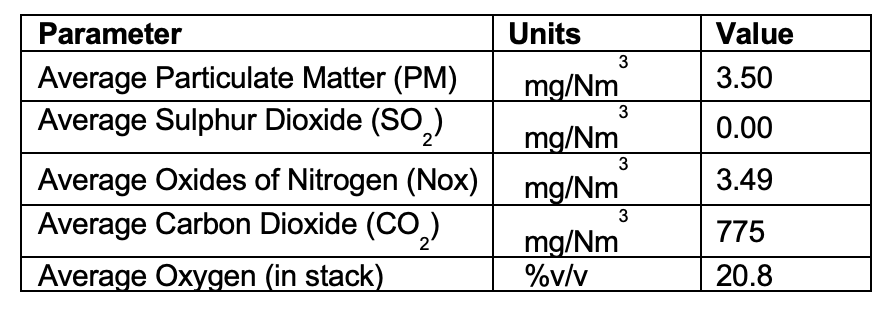
The campaign products consisted of ferromanganese alloys, slag and dust. A total of thirty (30) tests were conducted, and 25 out of the 30 tests achieved carbon-free production of ferromanganese alloy containing over 70% manganese and calcium-aluminate slag containing over 40% alumina (Al2O3). Emitted gases were analysed, where environmental monitoring confirmed negligible CO2 emissions, underscoring the strong potential of the HAlMan process to significantly decarbonize manganese alloy production
Ferromanganese alloy with Mn over 70 % was achieved in 25 out of 30 taps
Calcium-aluminate slag with Al2O3 over 40 % was achieved in 25 out of 30 taps
Analysis data showing that only ambient CO2 was detected from the off-gas emission stack